
Tax Accountant Salary And Pay
Tax accountants are the corporate navigators of an increasingly complex fiscal landscape—mapping new OECD rules, defending transfer pricing files, and identifying the reliefs that keep cash in the coffers. Their value spikes whenever legislation changes, which explains why pay rises roughly align with the intensity of local tax regimes and the presence of multinational HQs.
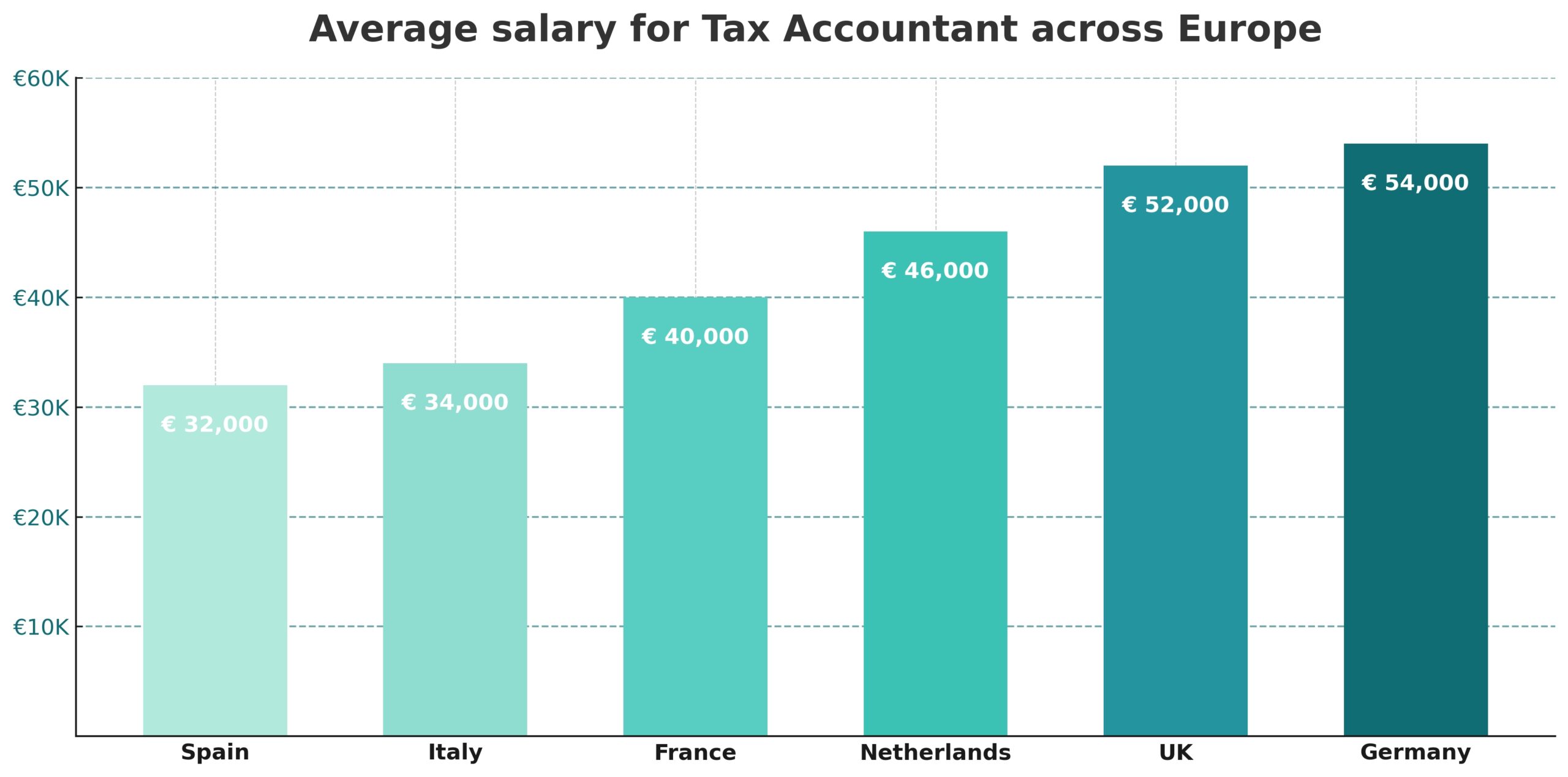 (Note: Salaries can differ based on industry, experience, and company policies.) . The above figures are based on estimates taken from Glassdoor.co.uk and Payscale.com.
2025 pay data show southern Europe starting in the low-30s—about €32 000 in Spain and €34 000 in Italy. The curve steepens in larger economies: France now averages €40,000 for mid-level tax specialists, while the Netherlands reaches roughly €46,000, buoyed by its holding company ecosystem and constant BEPS scrutiny. Anglo-Saxon and German markets remain Europe’s pay leaders: UK tax accountants cluster around £45,000 (~€52,000), and Germany tops the table at roughly €54,000, reflecting the premium on navigating both federal and Länder-level rules.
Tax accountants are highly regarded. They are key financial professionals for businesses. They command a competitive salary, no matter their region.
The United Kingdom and the Netherlands follow Germany in terms of salaries for tax accountants. London, Amsterdam, and Frankfurt dominate European investment, start-up curation, enterprise placement, and tax accounting.
Business Centrality
Tax accountants are not-so-secret weapons of a finance team and wider business.
This isn’t just down to their hard work and eagle-eyed, visionary application of skills to tax reporting and payment. Their position as tax advisors and planners also makes all the difference.
People judge tax accountants based on their ability to accurately follow tax laws and payment schedules. They are also judged on their ability to help finance teams and business leaders navigate the future of tax. They help them prepare for legal changes, tax payments, and audits. Tax accountants are not silent partners in a company’s financial system. They are at the centre of financial planning, advice, and diligence.

Job and Career Growth
It takes a specific financial talent to excel as a tax accountant. Entering accounting is hard, but working in and training for tax in any business is even more challenging.
Yet, tax accountants need to understand tax law, business tax, and auditing. These areas straddle tax accounting and broader tax planning, so many financial opportunities are open to them.
Tax accounting training provides a foundational skill set. It includes understanding tax law, compliance, and a knowledge base. This skill set enables work in various roles, including global auditors, advisory enterprises, and in-house positions. Additionally, it applies to board-level positions within charities, public service, and governmental bodies. It is also relevant to work in the banking and financial start-up sectors. There is a rich vein of employment opportunities within tax accounting and beyond!
Learn More About Tax Accountant Careers
The following articles cover the job description, salaries, CV-building tips and more:
Job Description & Profile, CV, Template & Examples, Qualifications, Skills & Requirements, How to Become
Search Jobs to find out about the tax accountant job roles we currently have available.
Job Seekers
On the hunt for your next role? Upload your CV below and we’ll be in touch to discuss your requirements.
Employers
For employers seeking the right skills and cultural fit for your business, send us your vacancy to find out more about how we can help.
Submit CV Send Us Your VacancySearch Jobs
Popular this week
- How Does Industry 4.0 Differ From The Previous Generation?
- What Are The Main Differences Between ACA and ACCA?
- What Qualifications And Skills Are Needed To Be An Accountant?
- Top 10 Skills For A Successful Finance And Accounting Career
- Agile For Accountants: Six Steps To Provide Necessary Tools And Relevant Processes